our history
OUR COMMUNITY HAS
come a long way
The Wellington Pride Parade Trust builds on a vibrant legacy of pride and protest in Te Whanganui-a-Tara dating back decades.
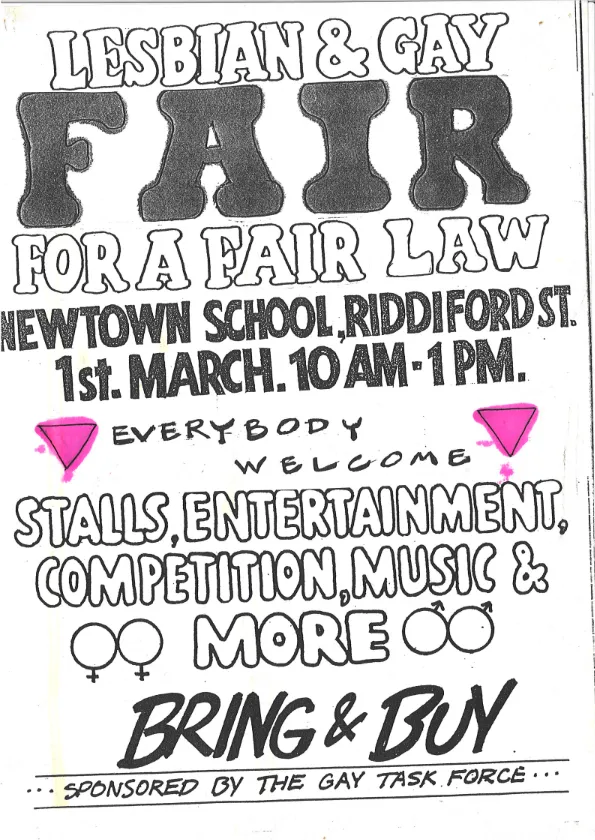
Poster from the Lesbian & Gay Fair, 1986. Source: Kawe Mahara Queer Archives Aotearoa.
In 1986, amidst intense national debate over the Homosexual Law Reform Bill, Des Smith organised the inaugural Newtown Lesbian and Gay Fair at Newtown School.
Named 'A Fair for a Fair Law,' it offered a safe, visible space to unite the community, push back against prejudice, and demand justice.
In 1991, five years after law reform passed, Peter Beardsley of the NZ AIDS Foundation launched the Devotion Festival to rally the community during the height of the AIDS crisis.
By 1992, Devotion expanded into a legendary dusk-to-dawn dance party at Shed 21 on the waterfront, eventually growing into a full community festival, a magazine, and a street parade.
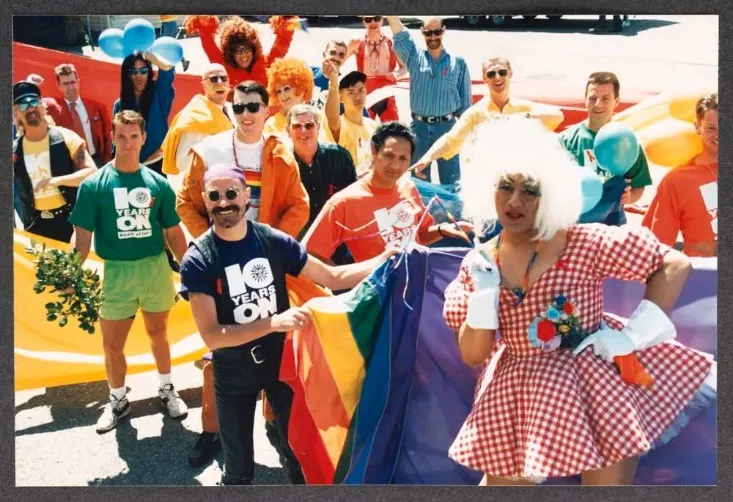
Devotion Festival, 1993. Source: Te Papa Tongarewa.
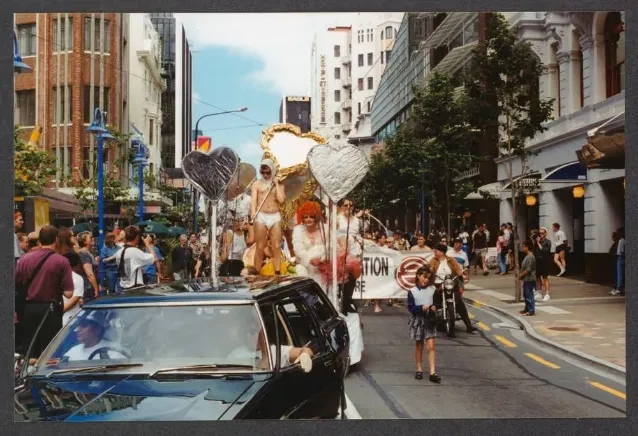
Devotion Festival Parade, 1995. Source: Te Papa Tongarewa.
Progress accelerated in 1993.
Wellington City Council approved the city's first official Pride parade, featuring floats, classic cars, live musicians, and accessible transport for people living with AIDS, just months before the Human Rights Act 1993 made discrimination based on sexuality illegal.
The original fair also evolved.
Relocated to Civic Square in 2008 as Out in the Square, the event adapted over the years through iterations like Out in the Park and Out in the Carpark, before becoming today's Out in the City.
Throughout every name change, its core mission remained unchanged: celebrating and advocating for Wellington's Rainbow communities.
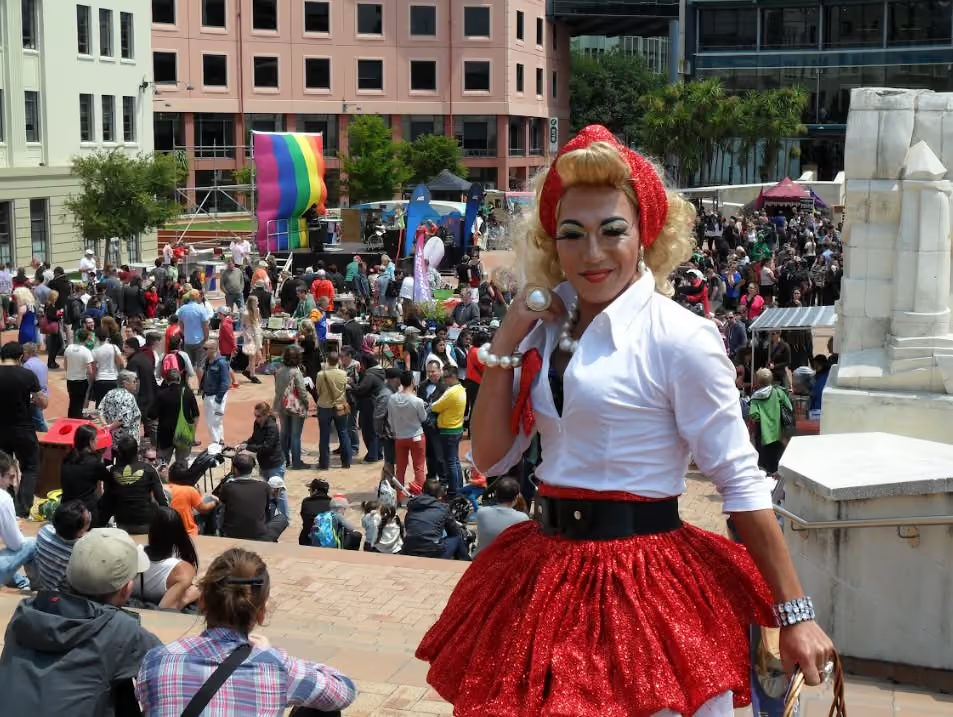
Out in the Square, 2013. Source: PrideNZ.
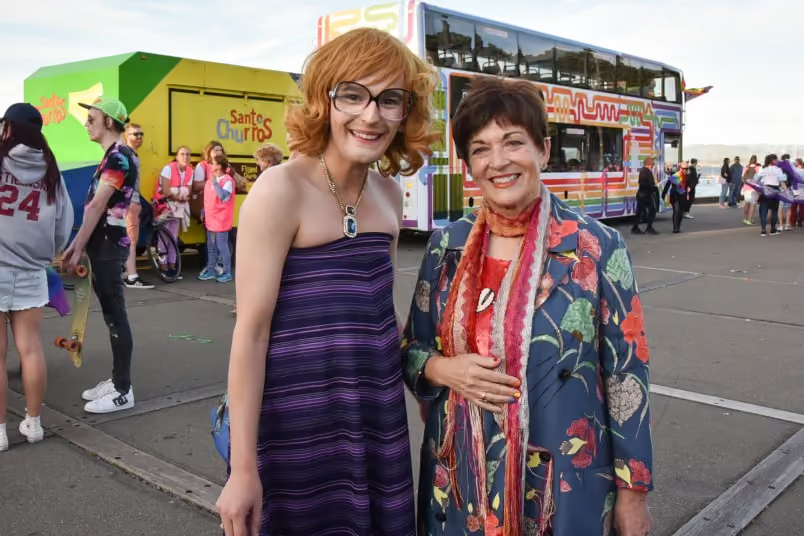
Wellington International Pride Parade, 2020. Source: Office of the Governor-General.
In 2018, the Wellington International Pride Parade (WIPP) launched down Courtenay Place.
The event proved resilient; when the 2019 Parade was delayed by the Christchurch terror attacks, it successfully returned two months later in May.
The 2020 Parade marked one of New Zealand's last major public gatherings before COVID-19 lockdowns. It featured a Royal New Zealand Air Force flyover and Governor-General Dame Patsy Reddy sporting rainbow-painted nails.
Pandemic disruptions ultimately forced the cancellation of the 2021 and 2022 parades. In 2023, the original WIPP organisation disbanded, redistributing its remaining funds to local Rainbow groups.
Out of this transition, the Wellington Pride Parade Trust was established in August 2023.
Founded as a new charitable entity, the Trust set out to return the Parade to its grassroots, delivering a safe, community-focused, and financially sustainable event.
Today, we proudly draw over 15,000 people to the streets of Pōneke each year, and we look forward to expanding our reach and impact as we champion visibility and equity for generations to come.
What began as a brave 1986 fair has grown into a massive celebration of our Rainbow whānau. Our efforts each year honour our activist pioneers while carrying the work forward for equality, inclusion and representation.
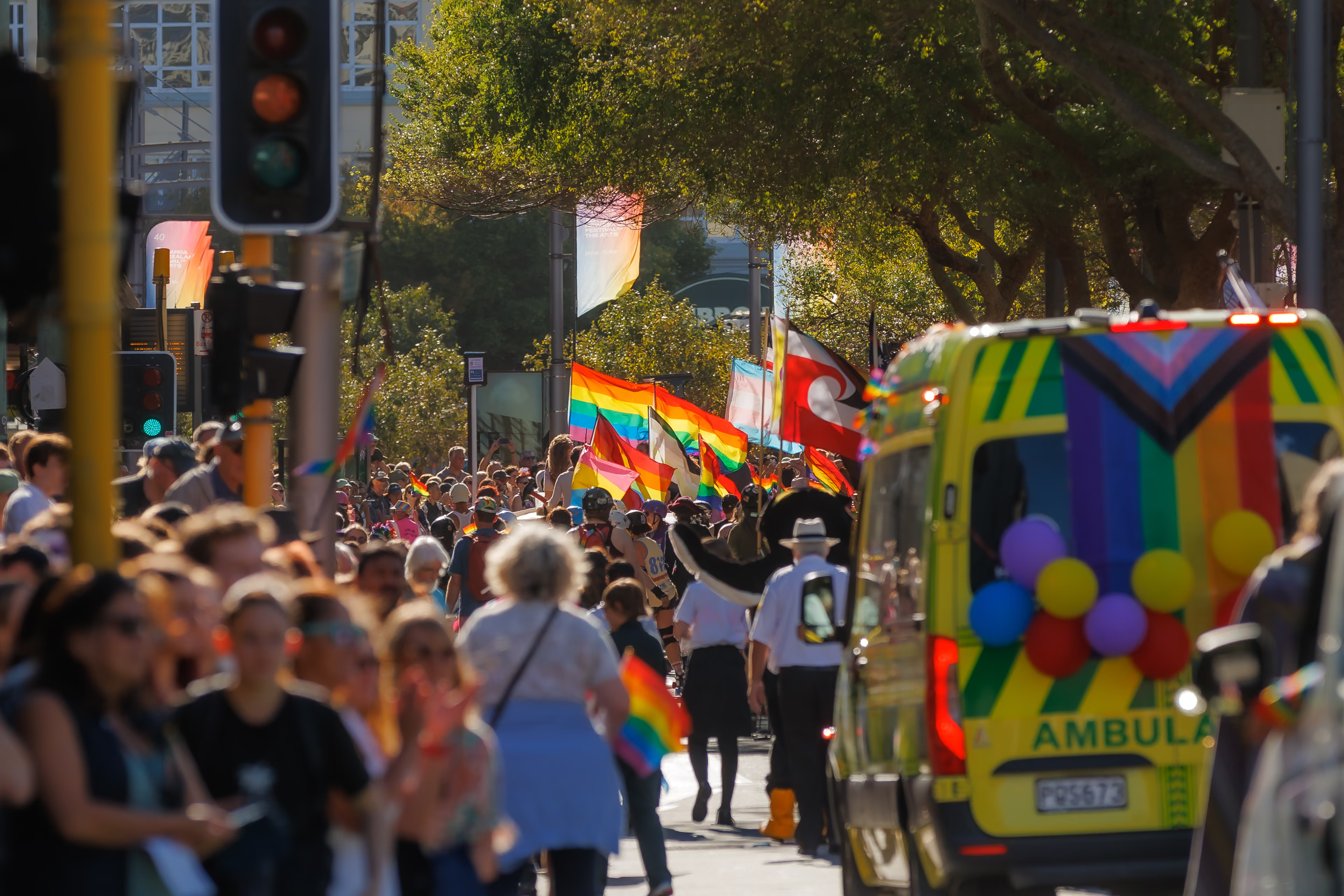
Wellington Pride Parade, 2026. Source: Wellington Pride Parade Trust.
Honouring the Whenua
We Walk Upon
When our community comes together and marches down Courtenay Place and Dixon Street, we acknowledge that we are walking on whenua that holds a deep and enduring history.
Long before these streets were paved, the area was home to Te Aro Pā, one of three major pā within the inner harbour, alongside Pipitea and Kumutoto. Covering approximately five acres along the original shoreline, the pā was established by Ngāti Mutunga, who migrated to Te Whanganui-a-Tara alongside Te Āti Awa.
Set along the Waimapihi Stream—bounded by Waitangi Stream to the east and Waikoukou to the west—the pā was a thriving kāinga. The harbour served as a bountiful food basket, supported by 25 to 30 hectares of cultivations extending south towards Pukeahu (Mt Cook), Omāroro (Vogeltown), and Paekawakawa (Island Bay). By the early 1840s, it supported nearly 200 permanent residents alongside many manuhiri.
Colonisation had an immediate, devastating impact. Following the arrival of the New Zealand Company in 1839, rapid urban expansion severed the community’s access to both the foreshore and its traditional cultivation grounds. Within decades, traditional Māori settlement at the pā had been entirely displaced.
Yet the mana of the land endured. In 2005, archaeological remains of rare whare ponga (fern-trunk structures) were uncovered during development. Preserved in situ at 39–43 Taranaki Street, these taonga stand as a tangible reminder of the settlement beneath our feet and the families displaced from their home.
As the Wellington Pride Parade moves through Te Aro, we recognise that our celebration unfolds on land with a profound legacy. We actively acknowledge Te Aro Pā and pay our deepest respects to the iwi and hapū who hold ahi kā—keeping the fires of occupation burning here today. We bring this respect directly into our pre-Parade communications, our opening ceremony and our live commentary, ensuring our celebration of diversity and inclusion remains firmly anchored in the history of the whenua and the people who have always cared for it.
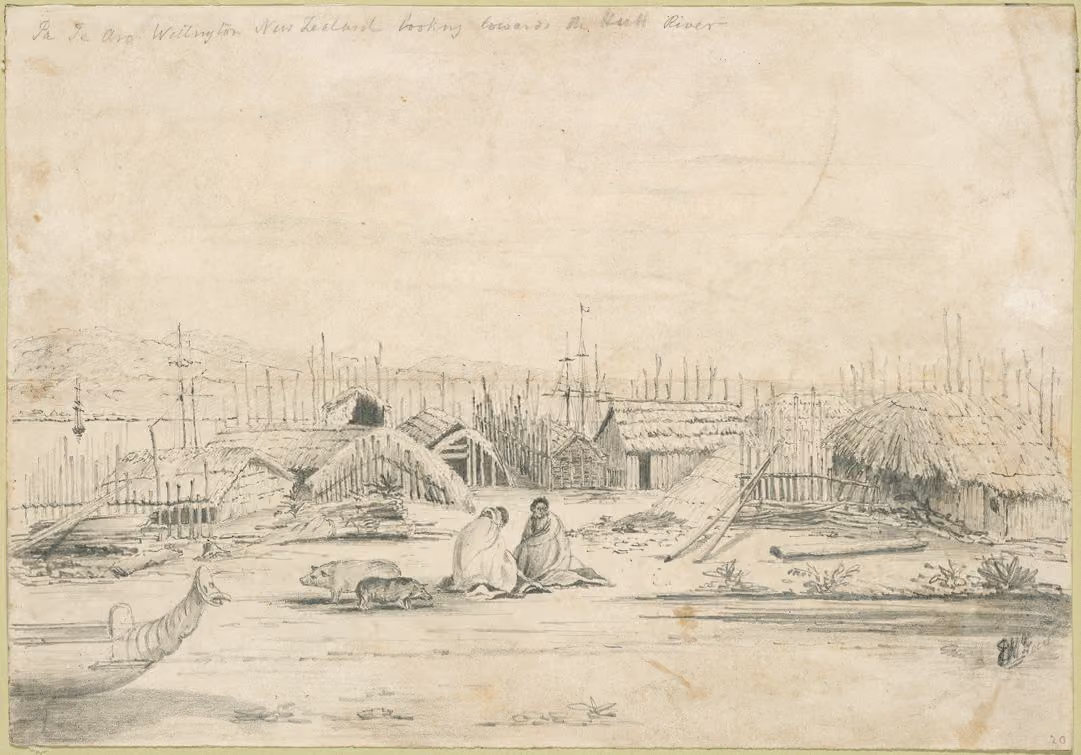
Pencil sketch of Te Aro Pā in 1842 or 1843. Attributed to John Gifillan or Edmund Norman. Source: Alexander Turnbull Library.
join the parade
The Wellington Pride Parade is a celebration for our Rainbow community and our allies.
Here’s how you can get involved!
Register your group
Rally your whānau, team, or squad—it’s time to march! Register your group today to show your support for Te Whanganui-a-Tara's Rainbow communities.
Partner with us
Partner with the Parade to make a meaningful, lasting impact alongside Wellington’s Rainbow communities. Discover our partnership opportunities today.
Volunteer to help
Want to be part of the magic? Join our volunteer whānau and help us bring the Parade to life. Every pair of hands makes a real impact!